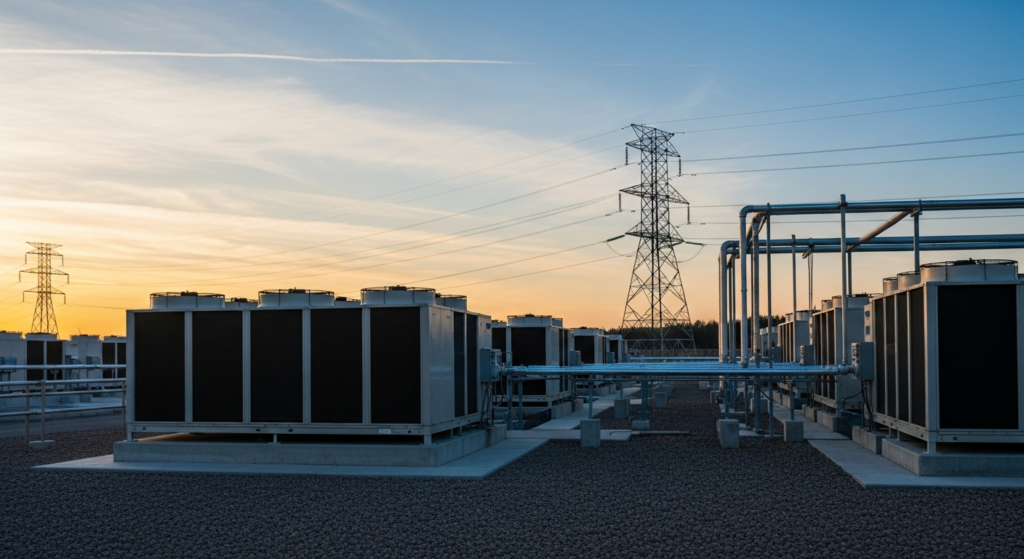
The rapid expansion of artificial intelligence infrastructure is increasingly highlighting a critical bottleneck: power. While much of the early conversation around AI centered on the advanced microchips required to run complex algorithms, industry observers now point to the sheer electrical demand of AI data centers as the primary challenge, a trend with implications for communities across the country, including Chapin.
Recent analyses of the tech business landscape indicate a sustained focus on AI infrastructure, data-center capacity, hardware demand, and the intricate energy planning required to support these burgeoning systems. The shift underscores a fundamental reality: advanced computing, particularly for AI, consumes vast amounts of electricity, straining existing grid equipment and necessitating significant upgrades and long-term strategic planning from power companies.
AI data centers, which house thousands of high-powered servers, operate around the clock, drawing immense and consistent loads from the electrical grid. This continuous demand poses a threat to grid reliability if not adequately managed and planned for. The scale of the power required is unprecedented, pushing utility providers to re-evaluate their generation, transmission, and distribution capabilities.
For a growing community like Chapin, situated in Lexington County, these national trends translate into tangible considerations for infrastructure resilience and future development. While Chapin may not host a hyperscale AI data center within its immediate limits, the regional power grid that serves the town is part of a larger interconnected system feeling these pressures. Utility providers serving the Midlands region face the challenge of forecasting and meeting increased demand, not just from AI, but from general population and economic growth.
Reliable and abundant electricity is a foundational requirement for all aspects of modern life and economic activity. Institutions vital to Chapin, such as Lexington-Richland School District Five and the Lexington Medical Center’s Chapin community medical center, depend on a stable power supply for their daily operations, from patient care to educational services. Any widespread grid instability or planned outages due to capacity issues could directly impact these essential services.
Furthermore, the town’s economic corridors, including areas along SC-76, rely on consistent power to support businesses, retail, and potential future commercial development. As Chapin continues to attract new residents and enterprises, the underlying infrastructure, particularly the electrical grid, must be robust enough to support this expansion without compromise. The ongoing national discussion about AI’s power demands serves as a reminder for communities to assess their energy future and the capacity of the systems that sustain them.
Why it matters in Chapin
The escalating power demands of AI infrastructure underscore the critical need for robust and reliable electrical grids, a challenge that resonates directly with Chapin’s ongoing growth and the stability of its essential services. While the town may not be a direct hub for AI data centers, the broader regional power infrastructure serving Chapin, including key institutions like Lexington Medical Center’s Chapin community medical center and Lexington-Richland School District Five, is subject to the same pressures facing grids nationwide. Ensuring adequate power capacity and grid reliability is paramount for maintaining the quality of life, supporting local businesses along SC-76, and facilitating future development in Chapin. The national focus on energy planning for AI highlights the importance of proactive infrastructure investment and strategic utility management for all communities.
Section: More Chapin SC business news
Chapin business profiles
Filed under: Chapin SC Business News