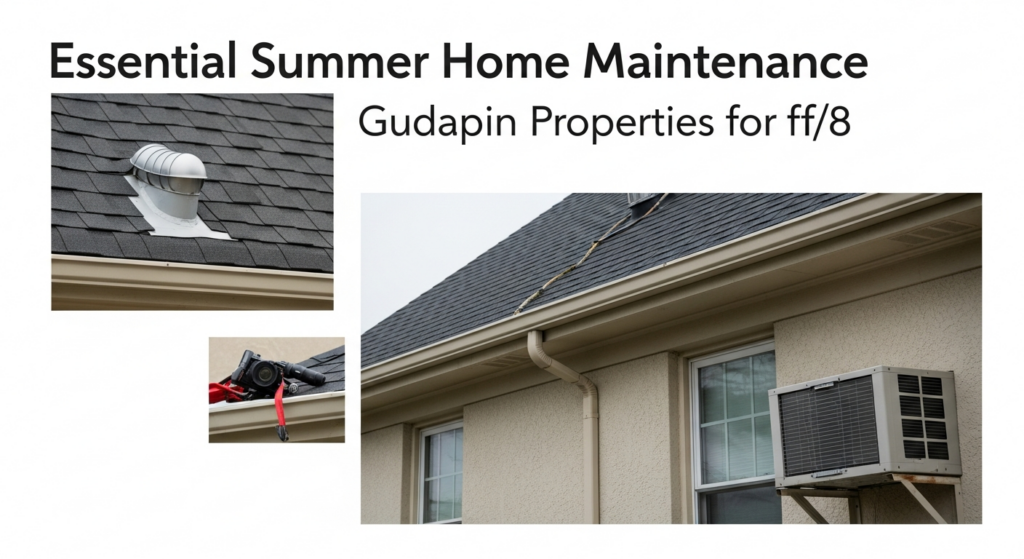
Maintaining a home through the summer months can prevent significant structural damage and costly repairs, according to recent guidance for property owners. These recommendations cover a range of tasks, from exterior inspections of gutters and roofs to interior system upkeep, all designed to ensure a property’s longevity and value in Chapin.
One of the most critical areas for summer inspection is a property’s gutter system. Clogged or damaged gutters can lead to severe water damage, as experienced by Erin Heger and Steven at their two-story home in Olathe, Kansas. After a spring storm, their overflowing gutters caused water to pool around the foundation, shattering a window and allowing water into their basement. The couple later invested $3,800 in a no-clog gutter system, a significant expense that followed an initial estimate of $8,000 for repairs. The guidance emphasizes inspecting gutters, gutter guards, downspouts, and extensions for any loose or corroded components, separation from the house, ground erosion, debris accumulation, overflows, or slow water flow. Water should be directed at least five feet away from the house to prevent foundation issues. While professional gutter cleaning typically costs around $150, a thorough cleaning is recommended every five years, even when gutter guards are in place, to ensure optimal performance.
Roofs also demand attention during the summer. Homeowners should look for missing or loose shingles, particularly after strong winds or storms, and inspect for problems at seams and flashing. Failed seals around windows, chimneys, and other roof penetrations can be common entry points for water. Inside the attic, checks for missing insulation, moisture, discoloration, or mold can indicate roof leaks that are not yet visible from the exterior. Due to the inherent risks and specialized knowledge required, roof repairs are generally recommended for qualified professionals.
For properties with outdoor living spaces, annual deck maintenance is crucial. Inspections should identify mold, mildew, popped screws, loose boards, areas of softness, or any wobbling in the structure. A yearly scrubbing with soapy water can help maintain the deck’s appearance and prevent the buildup of grime. Resealing schedules vary based on the finish: clear sealants often require annual application, while semi-transparent stains typically last two or three years, and opaque solid stains can protect the wood for three to five years.
Exterior painting is another significant summer project, ideally undertaken at the beginning or end of the season when temperatures consistently range between 50 and 90 degrees Fahrenheit. Proper preparation, including sanding, scraping, and filling any imperfections, is key to a durable finish. A well-executed paint job is expected to last approximately 10 years. Other outdoor tasks include cleaning a gas grill once per season, checking irrigation systems, managing weeds, replenishing mulch, and inspecting hoses, outdoor faucets, windows, and screens for any damage or wear.
Indoor maintenance is equally important. Regular tasks include changing HVAC filters to ensure efficient operation and good air quality, and clearing dryer vents to prevent fire hazards. Range-hood filters should be washed after soaking them for 20 minutes in soapy water to remove grease buildup. Cleaning refrigerator coils improves energy efficiency, and checking attic insulation and seals helps maintain consistent indoor temperatures. Maintaining indoor humidity levels between 30% and 50% is also recommended to prevent mold growth and discomfort. Persistent moisture issues or mold growth indoors warrant an inspection by an HVAC professional.
Deciding between do-it-yourself (DIY) projects and hiring professionals often comes down to a trade-off between time and money. Daniel Morgan, a homeowner in Virginia Beach, Virginia, adopted a hybrid approach for his summer projects. He chose to demolish a fence himself, saving on labor costs, but then hired professionals to install its replacement and open his swimming pool. For less specialized tasks, he paid a neighborhood teenager to power-wash concrete surfaces, and then handled the concrete resealing himself. This strategy allowed him to manage costs while leveraging professional expertise for more complex or time-consuming tasks.
Why it matters in Chapin:
Proactive home maintenance is particularly vital for property owners across Chapin, especially in neighborhoods like Timberlake Plantation, which feature a mix of established and newer homes. The integrity of these properties directly contributes to the overall aesthetic and property values within the community. Neglecting routine tasks, such as gutter cleaning or roof inspections, can lead to significant structural damage that impacts not only individual homeowners but also the broader real estate market in Chapin. Ensuring homes are well-maintained protects individual investments and helps preserve the desirability and economic stability of the area, reinforcing the community’s appeal for current and future residents. This careful stewardship supports the long-term health of the housing stock and the local economy.