Ask any angler around Chapin where to learn Lake Murray, and you’ll get a dozen different answers — because Lake Murray rewards a dozen different approaches depending on the season, the species, and the hour. This guide covers the tactics that consistently produce fish on Lake Murray and hold up across South Carolina’s lakes and rivers more broadly, so whether you’re launching at Lake Murray, working Saluda River, or exploring another SC Midlands fishery, you’ll have a season-by-season game plan that works.
When to fish South Carolina lakes and rivers
South Carolina’s mild climate means something is biting nearly every month, but three windows consistently produce the best action on waters like Lake Murray:
- Spring spawn (March-May): Largemouth bass, crappie, and bream move shallow to spawn as water temperatures climb into the mid-60s and beyond. This is prime time for sight-fishing beds and working shallow cover.
- Fall feed-up (October-November): As water cools and baitfish school up, bass, stripers, and crappie feed aggressively to build reserves for winter. Fall is widely considered the most underrated season on SC’s big reservoirs.
- Winter big-fish patterns (December-February): Cooler water pushes baitfish and predators deep. This is when trophy blue catfish and giant winter crappie are most catchable, using slow presentations near deep structure.
Summer fishing on Lake Murray is still productive, but usually requires shifting to early mornings, late evenings, or deeper, cooler water during midday heat.
For general species information and season guidance, SCDNR’s freshwater fishing page is a useful reference before any trip to Lake Murray.
Gear basics for SC Midlands waters
You don’t need a boat full of specialized gear to catch fish consistently on Lake Murray. A versatile, budget-friendly setup covers most situations:
- Rod and reel: A 6’6″-7′ medium-power spinning rod paired with a 2500-3000 size spinning reel handles everything from bream to mid-size stripers.
- Line: 10-15 lb braided main line with a fluorocarbon leader gives you sensitivity and abrasion resistance around brush piles, docks, and rock. Braid also helps detect subtle bites in deep water.
- Terminal tackle: Carry a range of jig heads, Carolina rigs, and a few crankbaits and soft plastics matched to the forage in Lake Murray and Saluda River. Local tackle shops and outfitters listed through Go Outdoors SC can also point you toward baits that are producing right now.
- Electronics: A basic fish finder pays for itself quickly on any of South Carolina’s larger reservoirs, helping locate brush piles, ledges, and bait schools.
5 must-know SC lake and river tactics
1. Blueback herring for stripers
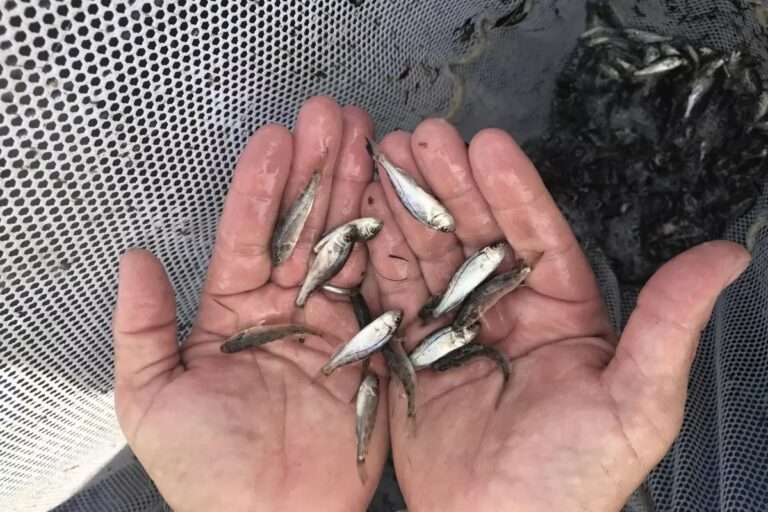
On reservoirs where blueback herring are already established, live-lining or free-lining herring is the single most effective way to target striped bass and hybrid stripers. Herring imitate the striper’s primary forage almost perfectly. Anglers rig herring on a light wire hook under a slip float or free-line them near baitfish schools marked on electronics. This tactic applies directly to Lake Murray striper fishing when herring are present, and to other SC Midlands reservoirs with established herring populations. Note that blueback herring are an introduced species in many SC reservoirs — SCDNR asks anglers not to transport live herring between water bodies, since moving them to new lakes can disrupt native fisheries.
2. Crappie brush-pile long-line trolling
Crappie stack up around submerged brush piles, standing timber, and creek channel structure on lakes throughout South Carolina. Long-line trolling — pulling multiple light jigs or small minnow baits slowly behind the boat at various depths — lets you cover water and locate active brush piles quickly before switching to vertical jigging once fish are found. This works on Lake Murray, Saluda River, and virtually every other SC Midlands reservoir with brush-pile habitat, especially in spring pre-spawn and fall.
3. Bass topwater dawn and dusk
Largemouth bass feed aggressively on topwater baits during low-light hours, especially in warmer months. Working buzzbaits, poppers, and walking baits along grass lines, docks, and shoreline points at first light or the last hour before dark consistently draws reaction strikes on Lake Murray and comparable SC Midlands bass fisheries. Match your retrieve speed to water temperature — faster in summer, slower as water cools in fall.
4. Shellcracker bed fishing on full moons in April
Redear sunfish, known locally as shellcracker, spawn predictably around the full moons of April and into May across South Carolina. Anglers who time trips to these lunar windows and fish red worms or crickets on light tackle near sandy-bottom coves and shallow flats can load a cooler quickly. This pattern holds true on Lake Murray as well as smaller SC Midlands ponds and rivers with shellcracker populations.
5. Blue catfish cut-bait drifting in winter
Winter is prime time for trophy blue catfish on South Carolina’s major reservoirs and rivers. Drifting fresh cut bait — shad or herring — slowly across deep channel edges and humps lets you cover ground until you locate schools of wintering catfish. Many of the state’s largest blue catfish are caught this way between December and February. This pattern works well on Lake Murray and other SC Midlands waters known for blue catfish, particularly larger river-reservoir systems.
Species-by-species notes for Lake Murray and beyond
Bass
Largemouth bass are the most widely targeted species on Lake Murray and across SC Midlands. Focus on transition zones — points, creek mouths, and grass edges — that connect deep water to spawning flats, and adjust depth with the season.
Crappie
Crappie fishing on Lake Murray peaks in early spring as fish move to shallow brush and cover to spawn, then again in fall around deeper structure. Small jigs and minnows fished vertically near brush piles are the standby technique statewide.
Striper
Striped bass and hybrid striped bass provide some of the most exciting rod-bending action in South Carolina. Look for surface activity early and late, and don’t be afraid to fish deep with herring or shad imitations once fish push down in warmer months.
Catfish
Blue, channel, and flathead catfish are all present in most major SC Midlands reservoirs and rivers. Channel cats respond well to prepared or cut bait fished on the bottom, while trophy-class blue catfish are usually targeted with fresher cut bait in deeper water.
Bream
Bluegill, redear (shellcracker), and other bream species offer reliable, family-friendly action nearly year-round on Lake Murray, with the best numbers during the spring spawn.
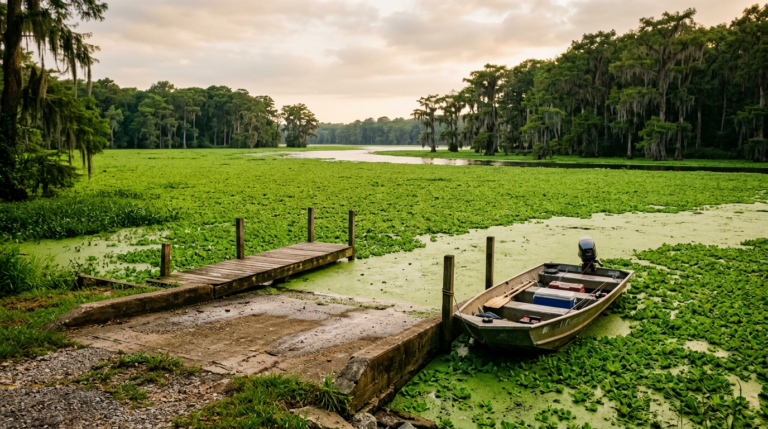
Boat ramp etiquette and safety
Lake Murray and other busy SC Midlands waters can get crowded on weekends, so a few etiquette basics keep launches moving smoothly for everyone:
- Stage your boat and gear before backing down the ramp — don’t load rods, coolers, or passengers at the ramp itself.
- Pull forward promptly after launching to clear the ramp for the next boat.
- Yield right-of-way to boats already underway, and keep a safe distance from anglers fishing near the ramp or shoreline.
- Wear a properly fitted life jacket, especially in cooler months when cold-water immersion is a serious risk.
- Check South Carolina’s boater education requirements before operating a boat, since a boater card may be required depending on your age and residency.
Stocking programs and trophy recognition
SCDNR maintains active fish stocking schedules for many South Carolina waters, supplementing populations of species like striped bass, trout, and hybrid bass in specific lakes and rivers. For trout waters especially, SCDNR publishes a regularly updated weekly stocking summary, and similar stocking programs support striped bass fisheries on reservoirs like Lake Murray. Check with your regional SCDNR fisheries office for the latest stocking activity on Lake Murray and other SC Midlands waters.
If you land an exceptional fish on Lake Murray, consider submitting it to the SC Angler Recognition Program (SCARP), which recognizes trophy-class largemouth bass, striped bass, blue catfish, brown trout, and crappie without requiring a state record. It’s a great way to get a quality catch documented and to contribute data SCDNR biologists use to manage these fisheries.
Whatever species you’re chasing, remember that a valid SC fishing license is required for anglers 16 and older on Lake Murray, Saluda River, and every other public water in the state.
Filed under: Chapin SC Fishing News
More coverage: Chapin SC fishing